rpo services canada jobs- What Employers Must Know Before Outsourcing Hiring in 2026
In 2026, Canadian employers are hiring into a market that’s fast-moving, skills-fragmented, and reputation-sensitive—where a slow process can cost you top candidates and a sloppy one can cost you trust. That’s why rpo services canada jobs has become a search phrase tied to a real operational question: should you outsource hiring to scale up, improve quality, and reduce risk—without giving up control? This guide breaks down what RPO actually is in Canada, what you’re still responsible for, how pricing typically works, and the checklist employers should use before signing anything.
What RPO means in Canada (and what it isn’t)
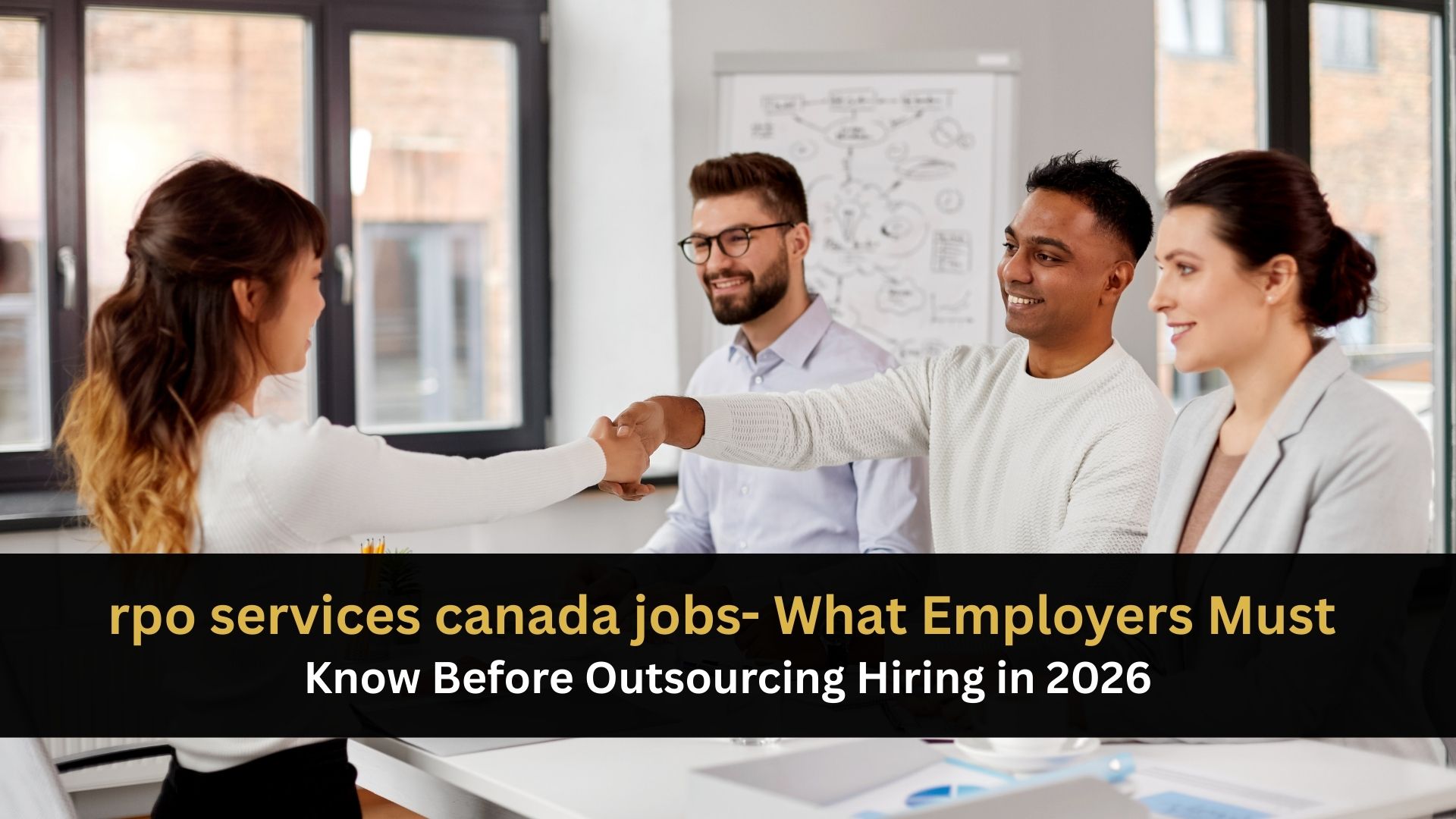
Recruitment Process Outsourcing (RPO) is not “renting a recruiter” and it’s not the same as handing off hiring decisions. In an RPO relationship, an external partner runs all—or parts—of your recruitment workflow under your brand and governance, with shared goals, reporting, and accountability. Think process ownership, measurable outcomes, and a consistent candidate experience, rather than one-off transactions. If you want a foundational primer before diving deeper, start with RPO fundamentals and the comparison guide on RPO vs. traditional staffing.
RPO also comes in shapes that fit different Canadian hiring realities. Some employers need end-to-end coverage across multiple job families; others need project RPO for a surge (seasonal operations, expansions, restructuring), or embedded pods aligned to business units. The best-fit model depends on your volume, role complexity, stakeholder capacity, and how quickly your hiring priorities change—topics we also explore in choosing the right RPO model.
In practice, an RPO can stabilize hiring by standardizing intake, tightening screening, improving scheduling speed, and building repeatable pipelines—especially when your internal team is stretched thin. For organizations that want a broader workforce strategy, Talent Solutions Toronto, recruitment process outsourcing (RPO) is often paired with stronger employer branding and better candidate communications so growth doesn’t come at the expense of experience.
The 2026 business case: cost, speed, quality, and risk
When RPO works, it doesn’t just “fill jobs.” It produces a hiring system you can measure, improve, and scale. Employers should insist on clear dashboards and a shared definition of success—time-to-fill, time-to-submit, offer acceptance, pass-through rates by stage, candidate satisfaction, and hiring manager responsiveness. If you want a metrics-first framework, use RPO performance measurement as a reference point.
Cost is where many employers get surprised, not because RPO is inherently expensive, but because the pricing model wasn’t matched to the hiring pattern. You’ll commonly see management-fee structures, cost-per-hire, retainers with performance components, or blended models. What matters is transparency around “extras” that quietly inflate spend: job ads, assessments, background checks, bilingual recruiting needs, agency spend governance, and technology fees. If you’re estimating ROI, the cost-saving calculator can help you pressure-test what you’re paying now versus a structured model.
There are also situations where RPO is the wrong tool. If hiring volume is minimal, role requirements are unclear, internal alignment is weak, or approvals are chronically delayed, outsourcing the process won’t fix the root issue—it will only relocate the frustration. In those cases, start by strengthening intake, leveling job descriptions, and tightening decision timelines before expanding scope.
Compliance and governance in Canada (what employers are still responsible for)
Outsourcing recruiting does not outsource responsibility. Employers still need governance around candidate data, access controls, retention, and vendor oversight—especially when multiple systems (ATS, scheduling tools, assessments) are involved. Your agreement should spell out who can see what, how long information is kept, how subcontractors are handled, and what happens if there’s a security incident.
Compliance also has a practical dimension beyond privacy. Provincial rules and sector expectations vary, and employers should ensure any partner can operate within local requirements and document process integrity. This is where clear governance routines (weekly operations, monthly steering) matter: they surface risks early, prevent process drift, and keep hiring managers aligned to one playbook.
The RPO partner scorecard (how to choose in 2026)
Choosing an RPO partner shouldn’t start with promises—it should start with proof. Ask for sample reporting, a sourcing strategy outline, SLA language, and references tied to similar hiring volumes and role types. Your contract should also clarify ownership: who controls employer brand voice, who writes candidate comms, how escalations work, what “quality” means, and how the partner handles bottlenecks caused by internal delays.
Employers also benefit from sanity-checking misconceptions before they buy. If you’re hearing claims like “RPO is only for enterprise” or “you lose control,” skim common RPO myths and the deeper overview on choosing the right RPO partner. A strong partner will welcome scrutiny and help you define the guardrails that protect your brand, your data, and your hiring outcomes.
If you’re evaluating vendors locally, Talent Solutions Toronto, recruitment process outsourcing (RPO) should translate into practical capability: regional market knowledge, bilingual capacity where needed, process discipline, and the ability to integrate with your stack instead of forcing a rebuild.
Technology in 2026: AI, automation, and the “human layer”
In 2026, “modern RPO” usually means a blend of people, process, and technology—without letting automation run the show. At minimum, an RPO team should be comfortable optimizing your ATS workflows, building talent pipelines in a CRM (or within your ATS if it supports it), and using automation for scheduling and status updates so candidates aren’t left guessing. For a clearer view of where tech supports outcomes (and where it shouldn’t replace judgment), see RPO technology and the digital shift and our perspective on AI in talent acquisition.
AI guardrails should be non-negotiable: transparency on how AI is used, documented human review steps, bias monitoring, and clear accountability when automation misfires. Speed is valuable, but not if it damages candidate trust or introduces inconsistency across hiring managers and locations.
In an RPO relationship, an external partner runs all—or parts—of your recruitment workflow under your brand and governance, with shared goals, reporting, and accountability.
Implementation plan: how to start without disrupting hiring
A smart rollout protects day-to-day hiring while building the foundation for scale. Most employers do best with a phased approach: early discovery (role intake, process mapping, stakeholder alignment), a short pilot (limited job families, tight reporting, weekly calibrations), and then a controlled expansion (more roles, expanded sourcing channels, refined SLAs). This is also where templates and standards become your friend: intake forms, scorecards, communication scripts, and escalation rules reduce chaos and speed up decisions.
Governance is the difference between “outsourced hiring” and “outsourced confusion.” Weekly operations calls keep requisitions moving and unblock bottlenecks; monthly steering reviews keep outcomes aligned to business strategy. If you want a candidate-first lens on the rollout, the principles in improving candidate experience through RPO are a useful benchmark.
Canada jobs + RPO: what “good” looks like in 2026 (mini-examples)
In high-volume hiring, “good” looks like predictable throughput: calibrated screening, fast scheduling, consistent updates, and hiring manager accountability for feedback windows. In specialized hiring, “good” looks like pipeline craft: proactive sourcing, credible outreach, strong role storytelling, and tight alignment on what “qualified” means so you don’t burn candidates with repetitive loops. In multi-province growth, “good” looks like standardization without rigidity: one process spine, with flexibility for local market realities, language needs, and role-specific nuances.
Across all scenarios, the pattern is the same: better hiring outcomes come from disciplined intake, transparent reporting, and a partner that can execute consistently under your brand.
Quick checklist employers can copy-paste before outsourcing hiring
Before you outsource, document your goals and boundaries in writing—then use them to evaluate vendors consistently. You should be able to answer: what roles are in scope, what success metrics matter most, who approves decisions, what your data/privacy requirements are, what systems the partner must work with, and what your governance cadence will be. If you need a broader view of how outsourcing supports growth phases, the evolution of RPO is a helpful companion read.
Conclusion:
Outsourcing hiring in 2026 can be a competitive advantage—if you treat it like a governed operating model, not a quick fix. The strongest programs pair clear SLAs, measurable outcomes, candidate-first communication, and technology that supports speed without sacrificing judgment. If you’re researching rpo services canada jobs, focus less on buzzwords and more on proof: dashboards, process ownership, privacy discipline, and real governance.
FAQ's
1) What’s the difference between RPO and a staffing agency in Canada?
RPO manages a defined recruitment process (end-to-end or partial) under your brand with shared reporting and governance, while staffing agencies typically focus on placements—often transactionally—using their own process and candidate pools.
2) Will we lose control of hiring decisions if we use RPO?
No. Hiring decisions stay with the employer. A well-structured RPO clarifies decision rights, speeds up the process, and improves consistency—without taking final authority away from your leaders.
3) How do RPO providers typically price services in Canada?
Common models include management fees, cost-per-hire, retainers with performance components, or blended structures. The key is aligning pricing to your hiring pattern and defining what’s included versus pass-through costs.
4) How fast can an RPO program launch?
Many employers begin with a short discovery phase and a pilot for a limited set of roles, then expand once reporting and calibration are stable. A phased approach reduces disruption and builds confidence.
5) Is RPO only for high-volume hiring?
No. RPO can be effective for specialized roles and multi-location growth—especially when you need pipeline building, consistent screening, and measurable hiring performance.
6) What should we ask for before signing with an RPO partner?
Ask for sample dashboards, example SLAs, escalation workflows, a sourcing plan, and references from similar role types and hiring volume. You want evidence of discipline, not just sales claims.
How Canadian Staffing Agencies Can Scale Faster with Recruitment Process Outsourcing (RPO) Canada’s staffing industry has become more competitive than ever before.
How Canadian Staffing Agencies Can Scale Faster with Recruitment Process Outsourcing (RPO) Canada’s staffing industry has become more competitive than ever before.
How Canadian Staffing Agencies Can Scale Faster with Recruitment Process Outsourcing (RPO) Canada’s staffing industry has become more competitive than ever before.
Explore how India EOR services simplify hiring, payroll, and compliance. Learn how businesses can expand in India efficiently with expert support from Bumsa Talent Solutions.
Discover why RPO services in India are the key to scalable, cost-effective hiring. Learn how businesses streamline recruitment and access top talent with Bumsa Talent Solutions.
Discover how Offshore RPO in India helps businesses streamline recruitment, reduce hiring costs, and access global talent with expert solutions from Bumsa Talent Solutions.
Discover how AEO Services in Canada can help your business rank in AI-driven search and voice results. Learn key strategies and how Bumsa Talent Solutions can boost your brand visibility.
Discover how Business Process Outsourcing in Toronto helps companies reduce costs, improve efficiency, and scale faster with tailored solutions from Bumsa Talent Solutions.
Discover how custom web development in Toronto can transform your website into a powerful growth engine. Learn key benefits, strategies, and why tailored solutions outperform templates.
Discover why choosing the right WordPress development company is crucial for your website’s success. Learn key benefits, risks, and expert tips from Bumsa Talent Solutions.
Discover how Technical SEO services improve website speed, crawlability, indexing, and search visibility to support long-term online growth, stronger rankings, and better website performance.
Discover how online marketing services help businesses grow faster through SEO, PPC, content marketing, social media, web design, and a data-driven digital strategy tailored for sustainable growth.
Learn how to hire faster without lowering standards or raising costs. Discover practical strategies to streamline recruitment, improve candidate quality, and build a more efficient hiring process with expert support.
Learn how Answer Engine Optimisation Toronto is transforming local SEO for businesses, from AI-driven search and featured snippets to voice search, trust signals, and stronger local visibility.
Skills-based hiring is reshaping recruitment in 2026. Discover why resumes matter less, how employers assess real capabilities, and what smarter hiring looks like for Canadian employers.
Discover how Canadian employers can use AI in Talent Acquisition to automate repetitive hiring tasks while keeping human judgment at the center of better recruitment decisions.
Looking for the best way to evaluate SEO support for your business? This guide breaks down the top services, pricing models, and performance indicators to help Canadian companies compare agencies with confidence.
Choosing the right website development company in Toronto can make or break your conversions. Discover 10 common website build mistakes that hurt leads, sales, and user experience—and learn how to fix them.
Explore the highest paying professions in canada for 2026, including salary ranges, career outlook, and the fastest paths into high-income roles across healthcare, technology, finance, and skilled trades.
Wondering whether it is time to hire a search engine optimisation consultant? Learn the signs, the benefits, and the most important questions to ask before hiring the right expert for your business.
Explore the highest paid jobs in canada with insights into top careers, salary potential, and the skills hiring managers value most. Learn how employers and candidates can stay competitive with smart hiring strategies and market-driven career planning.
Discover how search engine optimisation services help local businesses improve local rankings, attract qualified traffic, and convert more leads with a practical 90-day roadmap for steady growth.
Turn passive candidates into applicants with five proven plays—EVP, outreach, content, nurturing, and friction removal—plus KPIs, common mistakes, and FAQs for hiring teams.
Toronto website development can make or break conversions and brand credibility. Learn how speed, UX, security, accessibility, and SEO-ready builds turn visitors into leads—plus a practical checklist and FAQs.
Discover the highest paying professions in Canada and the skills employers value most. A parent-focused guide to preparing your child for a successful, high-income future in Canada’s evolving job market.
Discover why investing in SEO services Toronto is the key to boosting your local business visibility, attracting organic traffic, and achieving sustainable growth in a competitive city.
Struggling to scale your brand online? Discover how to choose the right digital marketing services—from SEO to social media—that truly match your business goals.
Learn how PPC services in Toronto help businesses attract high‑intent leads, increase conversions, and drive measurable ROI through strategic paid search campaigns tailored for the competitive Toronto market.