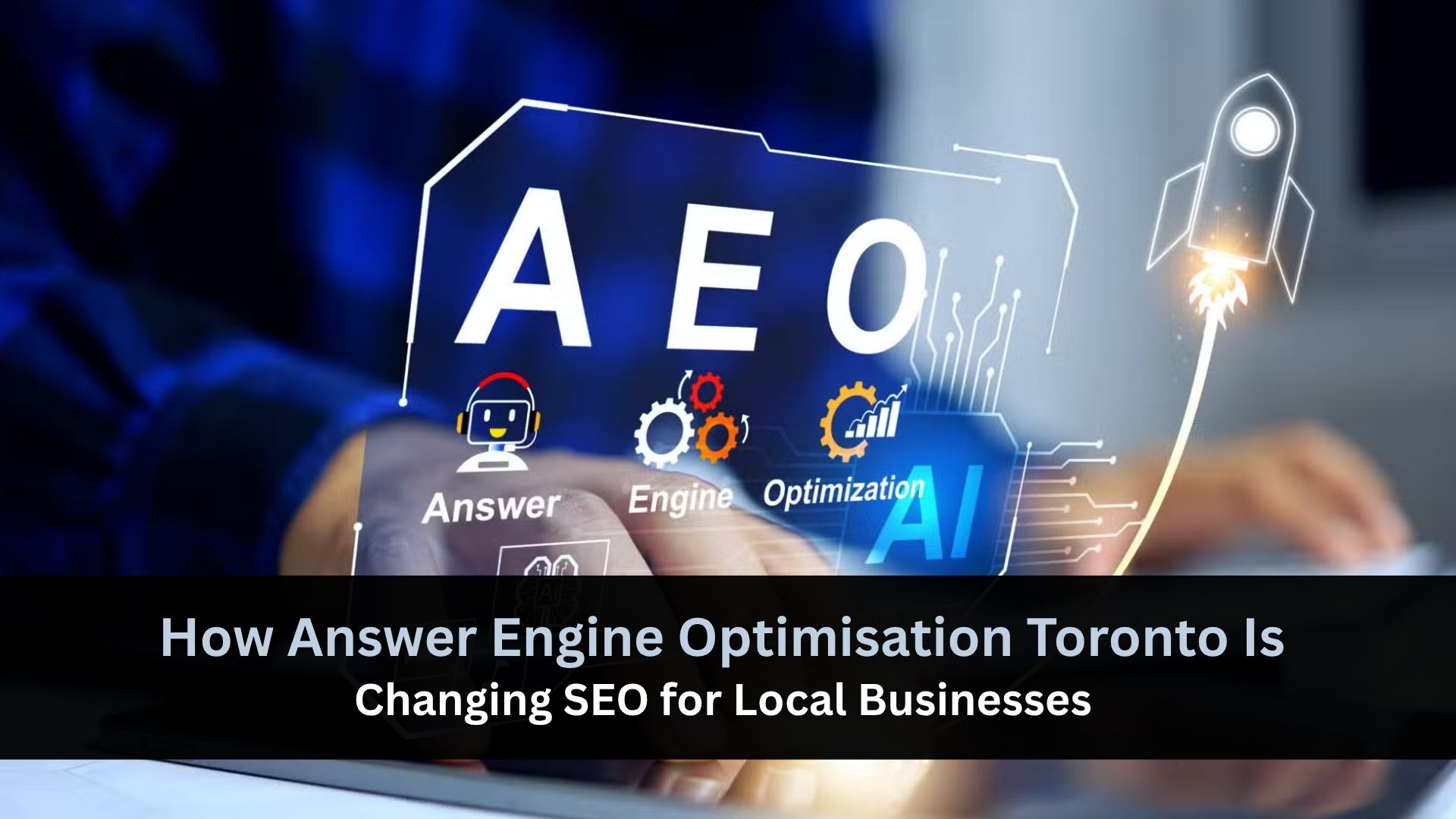
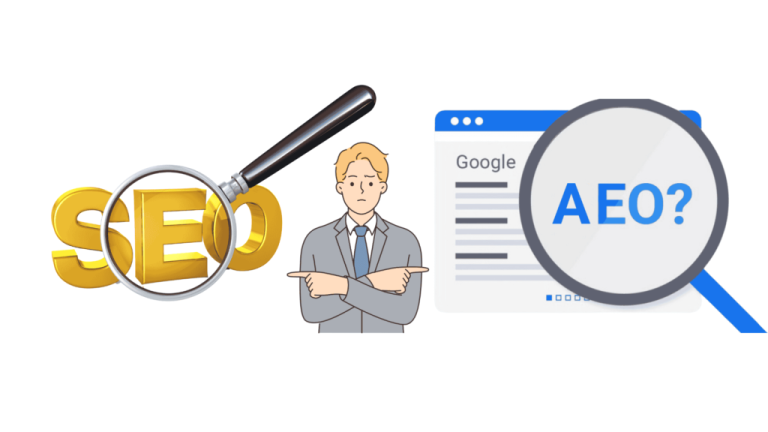
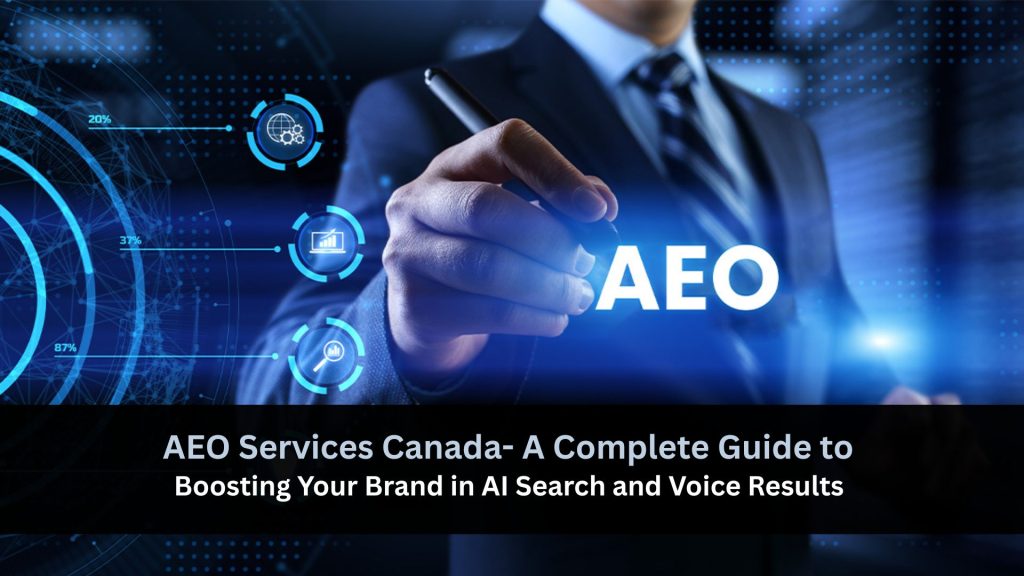
Answer Engine Optimisation, often called AEO, is the practice of structuring your website and digital presence so search engines, AI tools, and voice platforms can easily understand your content and surface it as a direct answer. Traditional SEO has long focused on helping pages rank. AEO builds on that foundation by helping businesses appear in featured snippets, local answers, map-driven results, AI summaries, and spoken search responses.
The difference is subtle but important. Traditional SEO asks, “How do I get my page higher in the rankings?” AEO asks, “How do I make my business the most useful and credible answer for this question?” The strongest local strategies now do both. A business still needs technical SEO, helpful content, and authority, but it also needs precise formatting, question-based copy, concise answers, and local relevance.
Toronto is one of Canada’s most competitive business environments. Whether a company operates in recruitment, home services, healthcare, law, real estate, or hospitality, it is competing against businesses that are investing more heavily in search visibility than ever before. In that environment, answer-focused content can help smaller and mid-sized companies stand out by speaking directly to what customers are already asking online.
People do not search the way they used to. Instead of typing “Toronto SEO company,” they might ask, “Who can help my small business get found online in Toronto?” or “What is the best way to improve local search visibility for a contractor in Toronto?” Those longer, more natural searches reward content that mirrors real customer questions and provides immediate clarity.
Another major shift is that users often get the information they need without clicking multiple pages. Google shows maps, featured snippets, business listings, FAQs, and AI-generated summaries before users even reach a website. That means local businesses must think beyond rankings alone. Being visible in answer-based search features now matters just as much as appearing on page one.
Much of local search happens on mobile devices, often when a consumer is ready to call, visit, compare, or buy. Voice search adds another layer to this behavior because spoken queries are typically longer and more question-based. Businesses that prepare content to answer those queries in a clear, natural format are better positioned to capture ready-to-convert traffic.
AEO is pushing businesses to rethink content creation. Instead of producing broad, generic pages stuffed with keywords, companies now need service pages, location pages, and resource articles that answer real customer questions with precision. This is one reason many businesses are expanding their content strategy through stronger FAQs, more useful service descriptions, and blog articles built around search intent. Companies exploring broader online growth often benefit from integrated web and online growth support, especially when search, content, and conversion performance need to work together.
Schema markup and structured data play a growing role in answer visibility. These signals help search engines identify business details, service areas, reviews, FAQs, and page meaning. When implemented correctly, structured data improves the chances that a business’s information will be understood and displayed in rich results.
For local companies, AEO is not limited to website copy. Google Business Profile has become part of the answer layer itself. A customer may see your reviews, hours, services, and location before landing on your website. That makes profile optimization, review quality, and business consistency central to modern local visibility.
The biggest benefit of AEO is that it puts businesses in front of people who are already looking for an answer and may be close to making a decision. That is a very different kind of visibility from broad awareness traffic. It is more targeted, more commercially relevant, and often more conversion-friendly.
Appearing as a direct answer creates a perception of authority. When users see a business featured clearly in search results, whether in a snippet, a map pack, or an FAQ-style answer, the business often earns trust before the first click. That early credibility can shape the entire buyer journey.
AEO helps filter traffic by intent. Someone asking a specific question is usually further along than someone typing a vague keyword. For local businesses, that often means better lead quality and a shorter path from search to inquiry.
Toronto industries are highly competitive, and answer-focused visibility can be the difference between being overlooked and being chosen. Businesses that want to improve rankings, user experience, and local authority together often pair AEO with seo services toronto strategies that support both technical optimization and content development.
Well-structured answers often outperform overly promotional content. Clear headings, short explanatory paragraphs, direct definitions, and logically organized sections make it easier for search engines and AI tools to extract useful information. Content does not need to sound robotic to achieve this. It needs to sound helpful.
Local SEO still depends on strong business signals. Your name, address, phone number, service area, and brand details should be consistent across your website, Google Business Profile, and directory listings. Search engines reward clarity, and inconsistency weakens confidence.
The best answer-focused strategies do not stop at one article or one FAQ. They support the full journey, from informational content to comparison content to service pages that convert. A prospect may first search for insight, then compare providers, then decide whom to contact. Businesses that map content to each of those stages are far more likely to stay visible.
One of the most common mistakes is over-optimizing content until it stops sounding natural. Search engines want clarity, but users still want a human answer. The strongest content sounds confident, clear, and useful without becoming repetitive or mechanical.
Generic content rarely performs well in local search. A Toronto audience expects references that reflect its market, neighborhoods, competitive environment, and consumer expectations. AEO works best when businesses connect their answers to the actual local context in which customers are searching.
FAQs are not decorative content. They are one of the clearest ways to signal answer relevance, but only when they are based on real customer questions. Weak FAQs with obvious or generic wording add little value. Strategic FAQs can improve both usability and search visibility.
Some businesses assume that answer-based visibility is only about formatting. It is not. Search engines also consider reputation, quality, expertise, and trust. That is why content strategy should sit alongside brand development, review management, website quality, and consistent publishing.
Contractors, plumbers, electricians, HVAC specialists, cleaners, and renovation companies often benefit quickly from AEO because customers search them with urgent, location-specific questions. Businesses in this category also tend to perform better when their content supports both local relevance and conversion clarity.
Law firms, consultants, accountants, financial advisors, and agencies can all benefit from AEO because their prospects often begin with detailed questions. The firm that answers those questions clearly has a stronger chance of entering the consideration set early.
Clinics, therapists, dental offices, and wellness providers often compete on trust and proximity. Answer-based content can help them appear for service-specific local questions while reinforcing expertise and accessibility.
For consumer-facing businesses, AEO helps with searches tied to location, reviews, hours, offerings, and comparisons. In these categories, search visibility is often won through a blend of strong profiles, consistent local data, and answer-friendly content.
Bumsa Talent Solutions understands that modern search is no longer siloed. Businesses need content, technical performance, credibility, and user experience to work together. That is why a local growth strategy must look at visibility from multiple angles, not just rankings alone.
What makes answer-focused optimization effective is its balance between discoverability and usefulness. A business should not simply attract attention. It should remove friction, answer questions, and move the user closer to action. That thinking aligns with Bumsa’s wider work in content, digital visibility, recruitment strategy, and web development.
For companies looking to improve local visibility in a rapidly evolving search landscape, Bumsa offers support that connects search strategy with real business outcomes..