Table of Contents
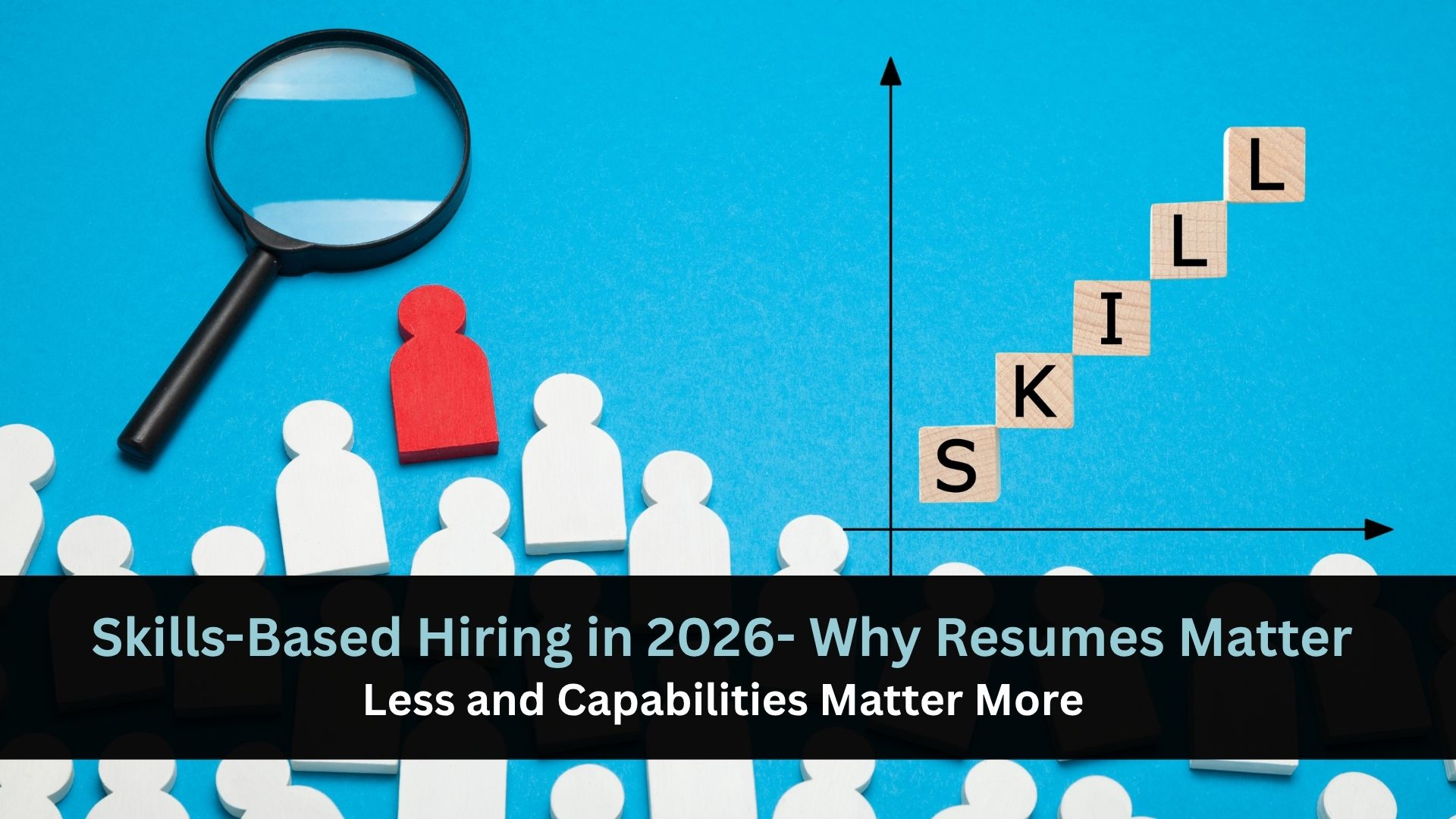
ToggleSkills-Based Hiring in 2026- Why Resumes Matter Less and Capabilities Matter More
In 2026, the hiring conversation has changed. Employers are still reading resumes, but they are trusting them less as a final measure of potential. A polished work history can still open the door, yet it no longer guarantees that a candidate can solve problems, learn fast, collaborate well, or adapt to a role that may look different six months from now. For any RPO company Toronto employers rely on, this shift is impossible to ignore. Hiring today is less about reading credentials and more about verifying what a person can actually do in the real world.
That change is not happening in isolation. Canadian employers are facing talent shortages, evolving job requirements, and growing pressure to build teams that can keep pace with technology and business change. At Bumsa, this is exactly where a strategic RPO solution becomes more valuable. Instead of treating recruitment as a race to collect resumes, modern employers are moving toward a hiring model that tests evidence, prioritizes capability, and aligns talent decisions with business outcomes. It is also why many organizations are rethinking what they expect from a hiring partner and exploring what sets Bumsa apart in a competitive market.
Why Skills-Based Hiring Is Becoming the Default in 2026
Work is changing faster than job titles can keep up
One of the biggest flaws in traditional hiring is that job titles often lag behind the work itself. A resume may say “marketing specialist,” “operations coordinator,” or “recruiter,” but those labels reveal very little about how the candidate performs in AI-assisted workflows, remote collaboration, cross-functional problem-solving, or modern digital environments. In a business climate shaped by automation and constant adaptation, employers need more than a snapshot of where someone worked. They need proof that the person can succeed in what the role demands now.
This is why skills-first hiring is becoming the new baseline rather than a fringe idea. Employers are realizing that the strongest candidates do not always come packaged in the most conventional format. A person’s capacity to learn, execute, and contribute has become more valuable than the prestige of a previous title. That broader shift connects closely with Bumsa’s perspective in AI in Talent Acquisition, where technology is framed as a force that should improve hiring decisions, not oversimplify them.
Employers need proof of ability, not just proof of background
For years, resumes worked as shorthand. Employers looked at schools, employers, titles, and years of experience and made assumptions about competence. In 2026, those assumptions feel riskier. Candidates can optimize resumes with AI, tailor language to applicant tracking systems, and mirror job descriptions with increasing precision. That does not make the resume useless, but it does make it easier to overestimate fit.
As a result, hiring managers are moving toward practical validation. They want work samples, structured interviews, scenario-based questions, portfolio evidence, and assessments that reflect the actual demands of the role. The central question is changing from “Where have you been?” to “What can you do here?”
Canadian employers are under pressure to close skill gaps faster
Canadian businesses do not have the luxury of slow adaptation. Across sectors, employers are dealing with shortages in technical skills, leadership capacity, digital readiness, and role-specific capabilities. That pressure makes it harder to depend on old hiring shortcuts. When employers miss on a hire, the cost is not just financial. It affects productivity, morale, timelines, and client outcomes.
That is why this topic matters especially in Toronto and across the Canadian market. Hiring teams need better systems, not just faster pipelines. Bumsa has explored this challenge in Why Is There a Talent Shortage and What Can You Do, and the answer increasingly points to skills visibility, better calibration, and more disciplined recruitment strategy.
Why Resumes Matter Less Than They Used To
Resumes show history, not always capability
A resume is retrospective by design. It tells employers what a candidate has done, but it often fails to show how they think, how they solve problems, or how they handle ambiguity. Two candidates can hold the same title for the same number of years and deliver entirely different levels of value. That gap is where capability-based hiring enters the picture.
Employers are learning that experience matters most when it is translated into evidence. A resume can suggest potential, but it should not be mistaken for proof. The strongest hiring processes in 2026 treat the resume as a starting point, not a verdict.
Degrees and titles can shrink the talent pool
Overreliance on degrees and status markers can quietly eliminate strong candidates before they are ever considered. Some professionals gain critical expertise through nontraditional paths, adjacent industries, contract work, self-directed learning, or internal career mobility. When employers filter too aggressively for pedigree, they may reduce innovation, limit diversity of thought, and miss candidates with highly transferable strengths.
This is also where better job design becomes essential. Employers who want stronger hiring outcomes must define what is genuinely required and what can be learned on the job. That thinking aligns with Bumsa’s insights in Writing the Perfect Job Description to Attract Top Talent, where clarity matters far more than inflated requirements.
AI-generated resumes make surface-level screening even weaker
The resume has also lost some power because it is easier than ever to polish. Candidates now use AI tools to refine wording, improve formatting, align language with job postings, and present themselves more strategically. None of that is inherently dishonest, but it does reduce the value of surface-level resume screening as a predictor of performance.
This means hiring teams must go deeper. A beautifully written application may still belong to a poor-fit hire. In 2026, smart employers understand that the resume can open interest, but only evaluation methods tied to real work can confirm readiness.
What Employers Should Measure Instead of Just Reading a Resume
Role-specific skills
The first and most obvious focus should be on the practical skills a role actually requires. That could include sourcing ability in recruitment, campaign analysis in marketing, technical fluency in software, financial accuracy in accounting, or stakeholder management in operations. When employers identify those skills clearly, hiring becomes more consistent and more defensible.
The most effective organizations build hiring around must-have capabilities rather than vague wish lists. They ask what the employee needs to accomplish, then work backward to define the skills that support those outcomes.
Transferable skills
Not all value is technical. Communication, judgment, adaptability, resilience, organization, leadership, and collaboration often determine whether someone succeeds once they enter the business. These are the skills that help people move across industries, grow into leadership, and stay effective when priorities shift.
That is why leading employers are paying more attention to behavioral evidence. Strong hiring teams are not just asking whether a candidate has done the exact same job before. They are asking whether that person can bring useful strengths into a changing environment.
Learning agility
In many roles, the candidate who can learn fastest may be more valuable than the candidate with the most familiar background. Learning agility has become one of the most important hiring signals in an economy shaped by change. Employers need people who can absorb feedback, master new systems, adapt to new expectations, and keep moving when the role evolves.
This mindset also connects to broader talent planning. Hiring should not only solve today’s vacancy. It should help build tomorrow’s capability. That same philosophy appears in How to Reorient Your Talent Acquisition Teams for Success, where recruitment is treated as a long-term business function rather than a reactive process.
AI fluency and digital confidence
In 2026, digital confidence is no longer a bonus in many roles. Even employees outside technical functions are expected to work with automation, AI-supported tools, data platforms, and digital collaboration systems. Employers are increasingly assessing whether candidates can operate effectively in modern environments, not just whether they have used a particular tool once before.
That does not mean every employee must be highly technical. It means they must be comfortable learning, adapting, and applying technology in a practical way. Capability, again, matters more than a resume line.
What Skills-Based Hiring Looks Like in Practice
Better job descriptions
The process starts before a resume is ever submitted. Better job descriptions focus on outcomes, required skills, and realistic expectations. They separate essentials from trainables, which helps employers attract a stronger and more relevant pool. It also reduces wasted interviews with candidates who look aligned on paper but not in practice.
Organizations that improve this step usually improve everything that follows. Clearer expectations create clearer screening, better interviews, and stronger hiring decisions.
Structured interviews
Unstructured interviews often reward confidence, chemistry, and storytelling more than evidence. Structured interviews create consistency by asking candidates the same role-relevant questions and evaluating responses against defined criteria. That makes hiring fairer and more reliable.
This is especially important in fast-moving teams where multiple stakeholders are involved. A structured process keeps the conversation grounded in what matters instead of drifting toward instinct alone.
Work samples and simulations
Work samples are one of the most practical ways to evaluate capability. A short writing exercise, sourcing challenge, analysis task, mock client response, or role simulation can reveal more than a perfectly optimized resume ever will. These exercises help employers see how candidates think, prioritize, communicate, and execute under realistic conditions.
They also improve confidence in the decision. When a candidate performs well in a simulation tied to the actual job, employers are making a more informed bet.
Portfolio and project-based review
For many roles, portfolios and project examples offer rich evidence. Marketing professionals can show campaigns, designers can show creative work, recruiters can discuss sourcing wins, and operations candidates can explain systems they improved. This shifts the focus from claims to proof.
Employers do not need complicated assessment infrastructure to do this well. They need relevance, consistency, and clear scoring standards.
Skills scorecards
A skills scorecard gives hiring teams a way to compare candidates against the same criteria. Instead of relying on vague impressions, employers define categories such as technical ability, communication, adaptability, judgment, and role alignment. This simple discipline often reduces bias and improves clarity.
It also supports better collaboration between HR, hiring managers, and external partners. Everyone is measuring the same thing, which leads to stronger final decisions.
Skills-based hiring is an approach that prioritizes a candidate’s actual capabilities over traditional filters such as degrees, prestige markers, or familiar job titles.
The Biggest Mistakes Companies Make When Trying Skills-Based Hiring
Removing degree requirements without changing the assessment process
Using vague definitions of “skills”
Letting AI screening replace human judgment
Ignoring manager training and interview discipline
Conclusion: In 2026, Employers Win by Hiring for What Candidates Can Do
The resume still has a role in 2026, but it should no longer carry the entire burden of decision-making. Employers that continue to hire mainly by pedigree, formatting, and familiarity risk missing the people who can actually create value. The future belongs to organizations that verify skills, test judgment, and hire with clearer evidence. For any RPO company Toronto businesses trust to improve hiring outcomes, that is now the real standard of excellence.
For employers ready to modernize their process, the path forward is clear: build a hiring model around proven capability, not paper credentials. Bumsa’s RPO services and the insights in Talent Solutions: A Paradigm Shift in the Industry show how recruitment can become more adaptive, more strategic, and more aligned with business growth. Companies that make this shift now will be in a stronger position to hire, retain, and develop talent long after the resume stops being the center of the story.
FAQ's