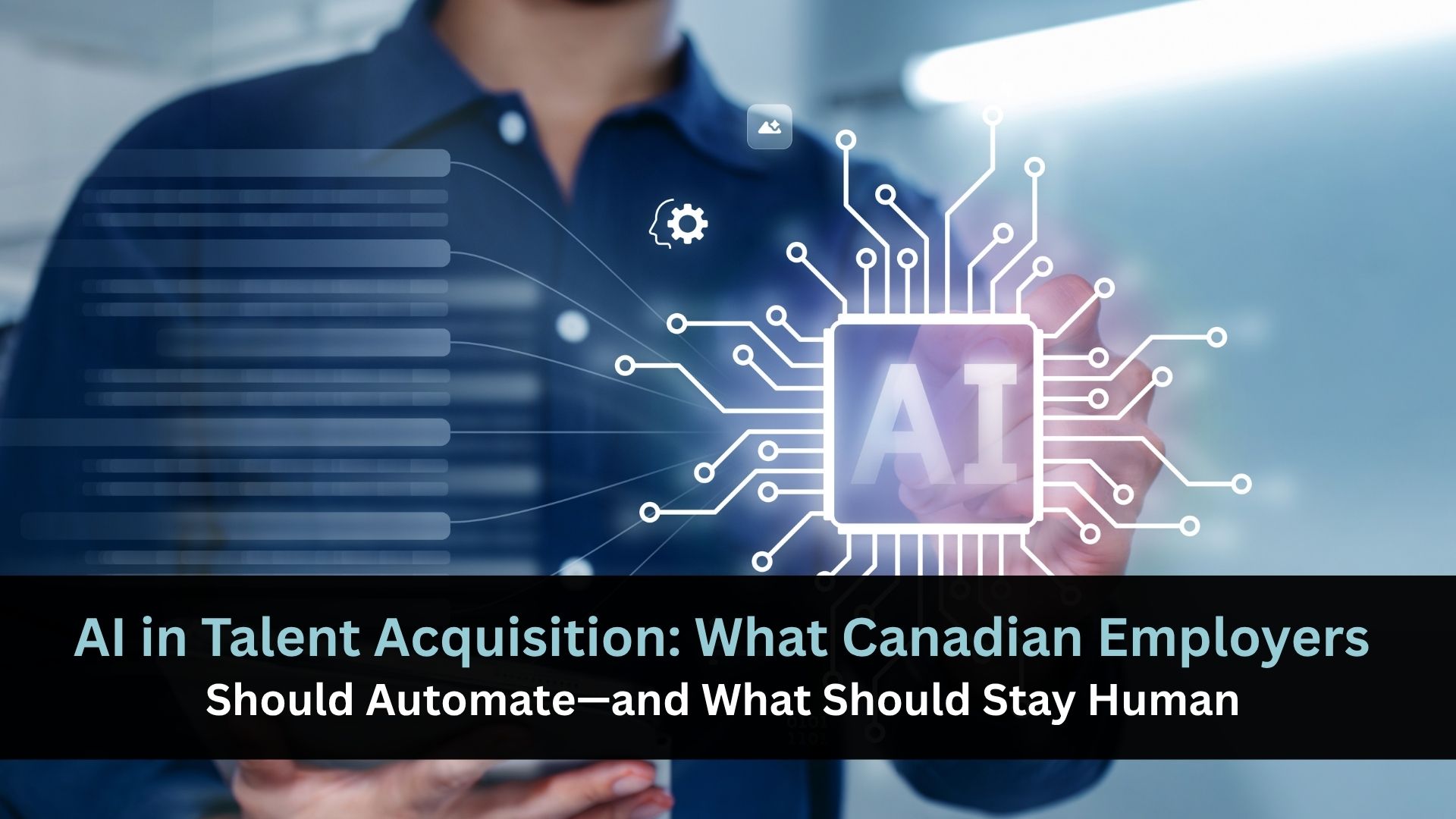
AI in Talent Acquisition: What Canadian Employers Should Automate—and What Should Stay Human
Canadian employers are under growing pressure to hire faster, reduce administrative bottlenecks, and still deliver a thoughtful candidate experience. That is exactly why AI in Talent Acquisition has become one of the most discussed shifts in modern hiring. From resume screening to interview scheduling, artificial intelligence can remove friction from the recruitment process and help teams focus on higher-value work. Still, hiring is not just a workflow. It is also a human decision shaped by trust, context, communication, and judgment. For employers trying to modernize without losing their values, the real question is not whether AI belongs in recruitment, but where it belongs. For organizations exploring smarter hiring support through Talent Solutions Toronto, the most effective strategy is often a balanced one: automate repeatable tasks, and protect the moments that demand human insight.
Why AI Is Changing Talent Acquisition in Canada
Hiring in Canada has become more demanding for employers across industries. Organizations are expected to move quickly in competitive labor markets, respond to large application volumes, and maintain consistency even when internal HR teams are stretched thin. These pressures have created an environment where AI tools seem like a natural fit. Employers want systems that can accelerate processes, improve organization, and help hiring teams spend less time on repetitive administration.
In practice, AI is already influencing many parts of recruitment. It can sort resumes, match applicants to job requirements, suggest candidate shortlists, automate scheduling, generate outreach messages, and identify patterns in hiring data. These capabilities can improve efficiency, especially for businesses managing multiple open roles or high-volume recruitment campaigns. As explored in Bumsa’s article on AI in Talent Acquisition: What It Means for the Industry, the technology is changing how employers think about speed, scale, and recruiter productivity.
Even so, automation on its own is not a complete hiring strategy. Employers that lean too heavily on AI risk reducing people to data points, overlooking strong candidates with unconventional backgrounds, or creating an impersonal experience that weakens employer brand. Recruitment is still about understanding potential, reading between the lines, and making decisions that shape teams and culture. AI can support those efforts, but it cannot fully replace them.
What Canadian Employers Should Automate
There are several parts of talent acquisition that are ideal for automation because they are repetitive, time-consuming, and process-driven. Resume screening is one of the clearest examples. AI tools can quickly identify candidates who meet baseline requirements such as certifications, location, work authorization, language ability, and technical qualifications. This helps employers reduce manual review time and focus recruiter attention where it matters most. Used carefully, this type of automation improves efficiency without removing human decision-making from the process.
Interview scheduling is another task that Canadian employers should automate whenever possible. Coordinating calendars, sending confirmations, and managing reminders consume valuable recruiter time without adding strategic value. AI-powered scheduling systems can simplify these steps and reduce delays between stages, creating a smoother process for both employers and candidates. This is especially helpful in fast-moving environments where speed can make the difference between securing a great hire and losing one.
Candidate sourcing and pipeline management are also strong areas for AI support. Recruiters often need to revisit past applicants, search talent pools, or organize candidates by skill set and readiness. Intelligent tools can surface relevant profiles faster, categorize applicants more efficiently, and support ongoing engagement with potential hires. For growing businesses using recruitment process outsourcing (RPO) models, this kind of structured automation can make hiring more scalable without sacrificing visibility into the pipeline.
Job advertising is another area where automation delivers measurable value. AI can help refine job descriptions, flag exclusionary language, and recommend improvements based on search behavior or market trends. That makes it easier for employers to publish clearer and more inclusive postings. Bumsa’s guide on writing the perfect job description to attract top talent offers useful insight into how stronger job content can improve application quality from the start.
Recruitment analytics should also be automated wherever possible. Employers need access to timely data on time-to-fill, source performance, conversion rates, and drop-off points across the hiring funnel. AI-supported reporting helps talent teams move beyond guesswork and identify what is working. When combined with expert oversight, these insights can shape a stronger recruitment strategy over time. Businesses looking for scalable hiring support often pair this kind of reporting with broader RPO services to improve consistency and cost control.
Routine candidate communication is another smart area for automation. Application confirmations, interview reminders, process updates, and standard FAQ responses can all be handled through automated workflows or chat-based systems. Candidates appreciate timely communication, and employers benefit from reduced administrative strain. The key is to automate the simple messages while leaving room for real human interaction when nuance matters.
What Should Stay Human in Talent Acquisition
For all its strengths, AI should not take over the most important human moments in hiring. Final candidate evaluation is one of them. A resume may show experience, but it does not always reveal adaptability, self-awareness, leadership potential, or long-term fit. Human recruiters and hiring managers are still better equipped to assess the context behind a career move, the motivation driving a candidate, and the subtle qualities that predict success within a team.
Relationship-building should also stay firmly in human hands. Candidates want to feel seen, heard, and respected throughout the hiring process. They often have questions that go beyond job duties and compensation. They want to understand team culture, leadership expectations, flexibility, growth opportunities, and whether the organization is truly aligned with what it promises. Those conversations shape trust in a way automation cannot replicate. Bumsa has previously explored this in 8 ways in which an RPO agency can improve your candidate’s experience, where the importance of responsive, people-centered recruitment is made clear.
Sensitive conversations must remain human as well. Salary discussions, offer negotiations, rejection calls, accommodation needs, and concerns about timing or relocation all require emotional intelligence and judgment. Candidates are far more likely to view an employer positively when those moments are handled with empathy and professionalism rather than through templated automation.
Diversity, equity, and inclusion decisions also need strong human oversight. AI can support consistency and may help identify patterns, but it should never be treated as a neutral decision-maker by default. Algorithms are shaped by the data and assumptions behind them, which means bias can still enter the process in ways employers may not immediately notice. Human review is essential to ensure fairness, accountability, and alignment with company values. Bumsa’s articles on can RPO services enhance workplace diversity? and inclusive hiring policies reinforce why inclusive hiring demands deliberate human leadership.
Employer branding and culture communication should remain human-led too. AI can assist with drafting copy or suggesting messaging, but it cannot authentically represent what a workplace feels like. That comes from real people speaking honestly about mission, expectations, and day-to-day culture. Candidates are more likely to trust employers whose messaging sounds genuine rather than overly polished or machine-generated.
Organizations are expected to move quickly in competitive labor markets, respond to large application volumes, and maintain consistency even when internal HR teams are stretched thin.
The Risks of Over-Automating Recruitment
Over-automation can create the illusion of efficiency while quietly damaging hiring outcomes. One major risk is the loss of genuine human connection. Candidates do not want to feel like they are being processed by a system with no room for conversation or individuality. When every interaction feels automated, employers may struggle to build trust and stand out in a crowded market.
Another risk is filtering out high-potential candidates too early. Some applicants may not use the exact keywords an algorithm expects, even though they have transferable experience, strong learning ability, or valuable industry perspective. Human recruiters often spot promise where rigid systems do not. That is why automation should support initial review, not act as the final gatekeeper.
Bias is another serious concern. AI tools are only as fair as the data they learn from and the rules that shape them. If employers assume technology is objective by default, they may overlook systematic issues hiding within automated decision-making. This can affect both candidate quality and organizational reputation.
There is also a branding risk. Hiring is one of the most visible expressions of how a company treats people. A process that feels cold, confusing, or overly mechanical can weaken employer perception. Canadian businesses that want long-term hiring success need to remember that efficiency matters, but so does the experience candidates carry away from each interaction.
How Canadian Employers Can Find the Right Balance
The best way to balance AI and human hiring is to start with a clear audit of the recruitment process. Employers should separate tasks into two categories: those that are repetitive and operational, and those that are relational and judgment-based. This makes it easier to see where automation can save time without affecting the quality of hiring decisions.
AI should be used to support recruiters, not sideline them. That means letting technology handle scheduling, data organization, screening support, and reporting while recruiters focus on conversations, evaluation, and relationship management. This approach reflects a smarter division of labor rather than an attempt to replace expertise. Bumsa’s article on why talent acquisition needs people reinforces this point well: successful hiring depends on human understanding as much as process efficiency.
It is also important to build human checkpoints into every major decision stage. Recruiters or hiring managers should review screening results, validate shortlists, guide interviews, and make final decisions with context in mind. AI can inform those choices, but it should not make them in isolation. For employers scaling hiring efforts through Talent Solutions Toronto support, keeping those checkpoints in place helps protect both candidate quality and employer reputation.
Training matters too. Hiring teams need to understand how AI tools work, where bias can emerge, and how to use technology responsibly. Employers should also be transparent about how automation is being used in the recruitment process. Candidates are more likely to trust a company that values both innovation and fairness.
Where RPO and AI Can Work Together for Better Hiring Outcomes
AI and RPO can complement each other when employers want both efficiency and quality. Technology can streamline workflows, improve data visibility, and reduce repetitive effort, while experienced recruitment professionals provide the judgment, relationship management, and adaptability that software alone cannot offer. This combination is especially useful for organizations hiring at scale or entering periods of change.
A well-structured RPO model supported by thoughtful automation can improve time-to-hire, create a more consistent candidate journey, and give employers better insight into their talent pipeline. At the same time, recruiters remain closely involved in candidate conversations, hiring manager alignment, and final decision support. That balance matters because fast hiring only works when the right people are being selected for the right reasons.
Canadian employers that want modern hiring systems without losing their human standards can benefit from working with partners who understand both technology and recruitment realities. Bumsa’s focus on ethical, people-first talent solutions reflects the kind of approach many businesses now need: one that uses innovation to improve hiring without turning recruitment into a purely automated transaction.
Final Thoughts:
The future of hiring does not belong to automation alone, and it does not belong to manual processes alone either. The most effective path forward is one where AI in Talent Acquisition is used with intention. Canadian employers should automate the tasks that slow recruiters down, such as scheduling, reporting, screening support, and routine communication, while keeping human ownership over candidate relationships, final evaluations, sensitive discussions, and inclusive decision-making. That is where real hiring value is created.
For employers looking to modernize sustainably, AI in Talent Acquisition works best when it strengthens people rather than replaces them. A thoughtful strategy supported by expert partners can help companies move faster without losing empathy, quality, or trust. Businesses exploring smarter hiring models can learn more through Bumsa’s insights on AI in talent acquisition, why talent acquisition needs people, and flexible RPO services designed to support better long-term recruitment outcomes.
FAQ's
What is AI in talent acquisition?
AI in talent acquisition refers to the use of artificial intelligence tools to support hiring tasks such as resume screening, interview scheduling, candidate sourcing, communication workflows, and recruitment analytics. Its purpose is to improve speed and efficiency while helping recruiters focus on more strategic work.
What parts of recruitment should Canadian employers automate?
Canadian employers should typically automate repetitive, process-heavy tasks such as screening for baseline qualifications, scheduling interviews, sending reminders, organizing candidate pipelines, posting job ads, and generating hiring reports. These tasks benefit from consistency and speed.
What parts of hiring should stay human?
Human involvement is essential in final candidate evaluation, culture and team-fit discussions, salary negotiations, rejection conversations, accommodation-related communication, and diversity-focused decision oversight. These areas require empathy, judgment, and context.
Can AI reduce bias in hiring?
AI can help standardize parts of the recruitment process, but it does not eliminate bias automatically. If the data or logic behind a system is flawed, bias can still be reinforced. That is why employers should always combine AI tools with active human review and accountability.
Is AI replacing recruiters in Canada?
AI is changing the recruiter’s role, but it is not replacing the need for human recruiters. Employers still need professionals who can build relationships, assess nuance, communicate clearly, and make informed hiring decisions that align with business and team needs.
How does RPO fit into AI-driven hiring?
RPO can help employers combine technology with hands-on recruitment expertise. A strong RPO partner can manage workflow improvements, use automation effectively, and still ensure that candidate experience and decision quality remain a priority.
How can employers keep hiring efficient without making it feel impersonal?
The best approach is to automate routine steps while making sure candidates still have access to real people during interviews, feedback stages, and key decision points. Efficiency should remove friction, not remove the human side of recruitment.
Employer of Record How to hire employees in India without setting up a company Employer of record India explained: hire employees in India without an entity, what it is legally,
How Canadian Staffing Agencies Can Scale Faster with Recruitment Process Outsourcing (RPO) Canada’s staffing industry has become more competitive than ever before.
How Canadian Staffing Agencies Can Scale Faster with Recruitment Process Outsourcing (RPO) Canada’s staffing industry has become more competitive than ever before.
How Canadian Staffing Agencies Can Scale Faster with Recruitment Process Outsourcing (RPO) Canada’s staffing industry has become more competitive than ever before.
Explore how India EOR services simplify hiring, payroll, and compliance. Learn how businesses can expand in India efficiently with expert support from Bumsa Talent Solutions.
Discover why RPO services in India are the key to scalable, cost-effective hiring. Learn how businesses streamline recruitment and access top talent with Bumsa Talent Solutions.
Discover how Offshore RPO in India helps businesses streamline recruitment, reduce hiring costs, and access global talent with expert solutions from Bumsa Talent Solutions.
Discover how AEO Services in Canada can help your business rank in AI-driven search and voice results. Learn key strategies and how Bumsa Talent Solutions can boost your brand visibility.
Discover how Business Process Outsourcing in Toronto helps companies reduce costs, improve efficiency, and scale faster with tailored solutions from Bumsa Talent Solutions.
Discover how custom web development in Toronto can transform your website into a powerful growth engine. Learn key benefits, strategies, and why tailored solutions outperform templates.
Discover why choosing the right WordPress development company is crucial for your website’s success. Learn key benefits, risks, and expert tips from Bumsa Talent Solutions.
Discover how Technical SEO services improve website speed, crawlability, indexing, and search visibility to support long-term online growth, stronger rankings, and better website performance.
Discover how online marketing services help businesses grow faster through SEO, PPC, content marketing, social media, web design, and a data-driven digital strategy tailored for sustainable growth.
Learn how to hire faster without lowering standards or raising costs. Discover practical strategies to streamline recruitment, improve candidate quality, and build a more efficient hiring process with expert support.
Learn how Answer Engine Optimisation Toronto is transforming local SEO for businesses, from AI-driven search and featured snippets to voice search, trust signals, and stronger local visibility.
Skills-based hiring is reshaping recruitment in 2026. Discover why resumes matter less, how employers assess real capabilities, and what smarter hiring looks like for Canadian employers.
Looking for the best way to evaluate SEO support for your business? This guide breaks down the top services, pricing models, and performance indicators to help Canadian companies compare agencies with confidence.
Choosing the right website development company in Toronto can make or break your conversions. Discover 10 common website build mistakes that hurt leads, sales, and user experience—and learn how to fix them.
Explore the highest paying professions in canada for 2026, including salary ranges, career outlook, and the fastest paths into high-income roles across healthcare, technology, finance, and skilled trades.
Wondering whether it is time to hire a search engine optimisation consultant? Learn the signs, the benefits, and the most important questions to ask before hiring the right expert for your business.
Explore the highest paid jobs in canada with insights into top careers, salary potential, and the skills hiring managers value most. Learn how employers and candidates can stay competitive with smart hiring strategies and market-driven career planning.
Discover how search engine optimisation services help local businesses improve local rankings, attract qualified traffic, and convert more leads with a practical 90-day roadmap for steady growth.
Considering RPO services in Canada? Learn the 2026 must-knows—costs, compliance, data privacy, tech, SLAs, and a practical checklist for choosing the right partner.
Turn passive candidates into applicants with five proven plays—EVP, outreach, content, nurturing, and friction removal—plus KPIs, common mistakes, and FAQs for hiring teams.
Toronto website development can make or break conversions and brand credibility. Learn how speed, UX, security, accessibility, and SEO-ready builds turn visitors into leads—plus a practical checklist and FAQs.
Discover the highest paying professions in Canada and the skills employers value most. A parent-focused guide to preparing your child for a successful, high-income future in Canada’s evolving job market.
Discover why investing in SEO services Toronto is the key to boosting your local business visibility, attracting organic traffic, and achieving sustainable growth in a competitive city.
Struggling to scale your brand online? Discover how to choose the right digital marketing services—from SEO to social media—that truly match your business goals.