Skip to content
In today’s fast-paced business world, Talent Acquisition is far more than simply filling open roles — it’s about building a forward-thinking, scalable hiring strategy that aligns with long-term growth. As companies expand, a casual “hire as you go” approach quickly becomes inefficient, inconsistent, and risky. That’s where structured frameworks and RPO solutions come in — helping organizations hire smarter, faster, and with greater consistency. If your business is scaling up, this article will help you identify when it’s time to adopt best practices in talent acquisition to stay competitive.

What Are Talent Acquisition Best Practices?

Beyond Just Hiring – Building a Scalable Strategy
Adopting best practices in talent acquisition means shifting from reactive hiring to proactive workforce planning. Instead of scrambling whenever a vacancy appears, companies start thinking ahead — building talent pipelines, strengthening employer branding, and enhancing candidate experience. This approach ensures your hiring remains sustainable, even as you scale rapidly.
Key Best Practices to Know
  • Structured interview processes: Standardized evaluation criteria, consistent interview rounds, and objective assessments.
  • Inclusive hiring frameworks: Ensuring diversity and fairness across sourcing, interviewing, and selection.
  • Strong Employer Value Proposition (EVP): Clearly defining and communicating what makes your company a great place to work.
  • Use of data and recruitment technology: Tracking time‑to‑hire, source effectiveness, candidate experience – enabling data‑driven decisions.
  • Onboarding integration: Ensuring a smooth transition from candidate to new hire, which supports retention and early productivity.

Signs It's Time to Scale Your Hiring Strategy

You're Growing Faster Than Your Team Can Keep Up
Whether you’re expanding into new markets, launching new products, or simply seeing a steady increase in demand — if the number of open roles keeps climbing, it’s a strong signal you need scalable hiring practices. Ad hoc recruiting often fails under pressure and can lead to burnout in HR or hiring teams.
Your Candidate Experience Is Suffering

If you notice lower acceptance rates, increasing candidate drop‑offs, or negative feedback on platforms such as Glassdoor, it’s time to re-examine your hiring flow. Slow responses, unclear communication, and a disorganized interview process can damage your reputation and deter quality candidates.

Turnover Rates Are Creeping Up
A hastily executed hiring process often leads to mismatched hires — people who don’t quite fit culturally or role-wise. If turnover or early attrition is rising, it’s a red flag that you need more structured evaluation and onboarding.
Hiring Is Taking Too Much Time or Too Many Resources
When internal recruiters or HR staff are overwhelmed, juggling too many roles, or spending excessive hours just coordinating interviews — your system isn’t scalable. It’s inefficient and distracts from core business goals.
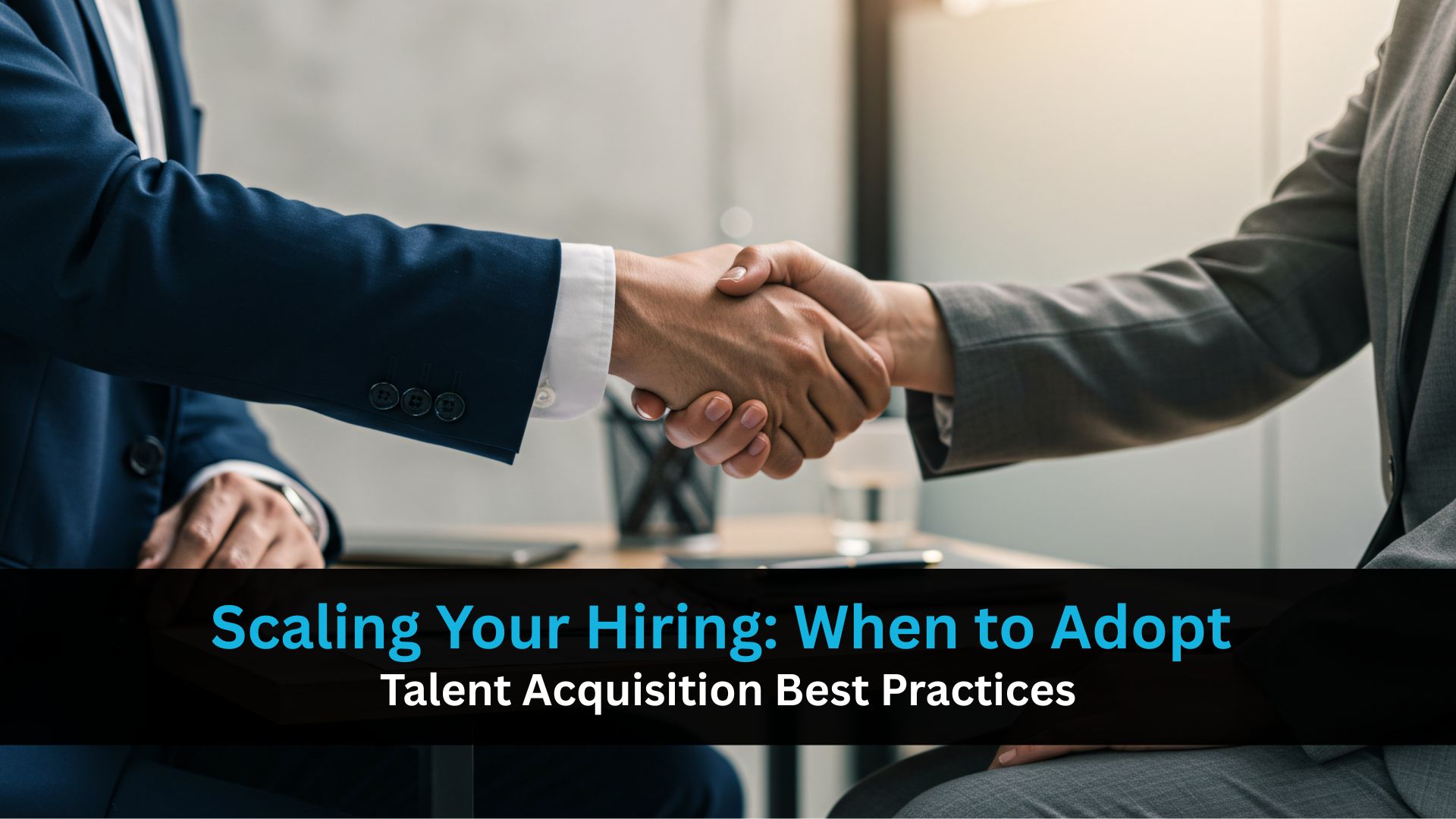

Consistent evaluation standards, candidate screening, and onboarding practices reduce the chances of bad hires — saving costs associated with turnover, rehiring, and lost productivity.

How Talent Acquisition Best Practices Improve Scalability

Better Forecasting & Workforce Planning

With a strategic approach, you can forecast hiring needs aligned with business growth — avoiding talent gaps and bottlenecks. Structured planning ensures you don’t scramble when a project or expansion opportunity arises.

Consistent evaluation standards, candidate screening, and onboarding practices reduce the chances of bad hires — saving costs associated with turnover, rehiring, and lost productivity.

Stronger Employer Branding

A smooth, professional hiring process and positive candidate experience helps build your reputation. Over time, this attracts passive candidates and enables you to compete for top talent proactively.

When to Engage External Support Like RPOs

You’re Scaling But Lack In‑House Expertise

Rapid growth doesn’t always come with deep recruitment bandwidth. If you don’t have the teams or the experience to build scalable hiring systems, external support can fill the gap. By choosing to partner with experts, you bring in best practices without having to build them internally.

You Need Cost Efficiency with Speed

External partners often provide access to a broader candidate pool, better sourcing strategies, and streamlined processes — all contributing to reduced time-to-hire and lower hiring costs compared to building an in-house team in the early stages. This is where solutions from a reliable agency provide real savings.

When You’re Ready to Compete for Top Talent

When your growth ambitions demand top-tier talent, a strategic recruiting partner can help refine your EVP, improve sourcing pipelines, and nurture passive candidates. This ensures you stay ahead in a competitive hiring landscape.

For businesses seeking external support, services such as Benefits of Having Recruitment Process Outsourcing on Your Side.

If your internal team needs a reset, you may also find value in How to Reorient Your Talent Acquisition Teams for Success.

Final Thoughts – Scale with Strategy, Not Stress

Scaling your hiring demands more than just posting job ads — it’s about thoughtful Talent Acquisition that can grow with your business. The moment you notice hiring becoming a drain on time, resources, or quality, is the time to consider strategic change. Leveraging trusted RPO solutions — and working with a partner like Bumsa Talent Solutions — ensures you recruit with consistency, quality, and foresight. By adopting best practices early, you set your organization up for growth without hiring chaos. Explore more about what we offer at our RPO services page and learn how smart hiring can secure your long-term success.

FAQ's

Q: What’s the difference between recruitment and talent acquisition?
A: Recruitment tends to focus on filling immediate vacancies — reactive and short-term. Talent acquisition is a strategic, long-term process that builds a talent pipeline, focuses on employer branding, and aligns hiring with business goals.
Q: How do I know if my current hiring approach is scalable?
A: If you frequently face delays, backlog of open positions, overwhelmed HR staff, poor candidate feedback, or high turnover — those are strong signs your approach isn’t scalable and needs restructuring.
Q: Can small businesses benefit from talent acquisition best practices?
A: Absolutely. Even small businesses can benefit by starting early with structured hiring, clearly defined EVP, and efficient processes. This foundation makes growth smoother when expansion begins. In fact, partnering with a trusted agency during early growth can bring economies of scale without building a full in-house team.
Q: Is it expensive to adopt RPO services early on?
A: Not necessarily. Outsourcing can often be more cost‑effective than building and maintaining a full internal recruiting team — especially when factoring in technology, overhead, and time costs.
Q: When should a business consider switching from internal recruiting to external help?
A: Consider external help when growth accelerates, hiring demand exceeds internal capacity, or when you lack the expertise to implement best practices. If hiring becomes reactive or chaotic, that’s a signal it’s time for professional support.
Recent Posts