
Skip to content
In today’s competitive hiring environment, Talent Acquisition has become more than a hiring function—it’s a strategic advantage. Organizations are under pressure to not only find the best candidates but to do so quickly and efficiently. A poor hiring process can cost time, productivity, and top-tier candidates. As technology, candidate expectations, and competition evolve, the need to hire smarter and faster has never been more urgent. This article explores effective strategies that businesses can implement right now to optimize their Talent Acquisition approach and stay ahead in 2026.

Why Hiring Smarter and Faster Matters in 2026

The Cost of Slow Hiring

Slow hiring doesn’t just affect the recruitment team—it impacts the entire business. Prolonged vacancies lead to missed revenue opportunities, increased workloads on current staff, and often, the loss of qualified candidates to faster-moving competitors. According to our recent insight on RPO performance and how to measure success, improving speed is crucial for competitive edge.

The Risks of Rushed Hiring

While speed is critical, rushing the process without structure or strategy can lead to poor hires. This can result in low retention, poor performance, and costly re-hiring. The goal is to balance agility with accuracy.

Core Talent Acquisition Strategies That Work

1. Leverage Recruitment Process Outsourcing (RPO)

One of the most effective ways to speed up and streamline hiring is through recruitment process outsourcing (RPO). RPO partners, like Bumsa Talent Solutions, take on all or part of your recruitment function, bringing industry expertise, technology, and scalable resources to the table. This not only improves time-to-hire but also elevates candidate experience.

Learn more about the benefits of having RPO on your side and why RPO partners are critical for startups.

2. Optimize Job Descriptions with SEO

A job description is often your first impression. By writing job listings that are keyword-optimized, inclusive, and clearly defined, companies improve visibility on search engines and job boards. Check out our guide on writing the perfect job description to attract top talent.

3. Implement Data-Driven Hiring Decisions

Smart companies rely on data. By using Applicant Tracking System (ATS) analytics, businesses can identify bottlenecks, predict candidate success, and enhance sourcing strategies. Data-driven hiring also allows for benchmarking, helping you evaluate what’s working and what’s not.

4. Embrace AI and Automation

Modern Talent Solutions Toronto companies are increasingly integrating AI to simplify and accelerate recruiting. From AI chatbots handling pre-screening to resume parsing software, these tools allow recruiters to focus on building relationships while technology handles the tedious tasks. Learn more about AI in talent acquisition and its real impact.

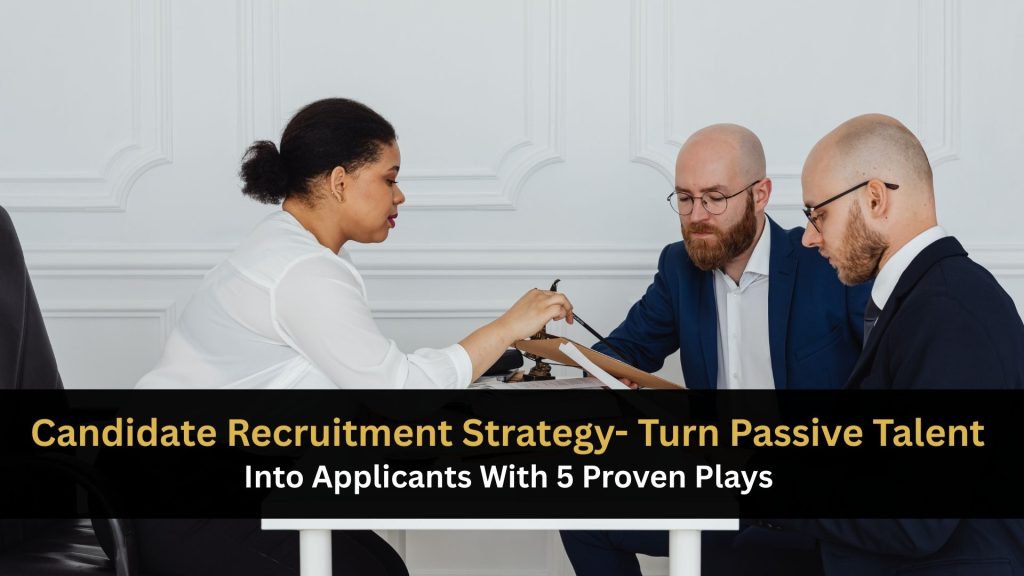
5. Engage Passive Candidates Proactively

A proactive approach to sourcing passive candidates can give companies access to a wider talent pool. Leveraging social platforms like LinkedIn and YouTube, or even underutilized ones like Reddit, can be a game changer. Dive into our article on revisiting your passive candidates recruitment strategy and discover under-the-radar sourcing tools.

RPO partners like Bumsa bring industry knowledge, technology, and scalability, which speeds up hiring while improving quality and candidate experience.

business head start bumsa

6. Focus on Employer Branding

Employer branding is no longer optional—it’s essential. Candidates today research company culture, values, and leadership before applying. Strong branding, reflected in your careers page, social media presence, and interview experience, significantly boosts application rates.

7. Build a Talent Pipeline in Advance

Waiting to hire until a role opens is a mistake. Smart recruiters build pipelines and keep past candidates engaged. Silver medalists—those who almost made it—can be nurtured for future roles. Companies working with recruitment process outsourcing (RPO) providers can benefit from continuous talent pipeline management, keeping them ready for future needs.

The Role of Technology in Smarter Recruitment

Integrating Digital Marketing Into Recruitment

Talent acquisition is no longer just about HR—it’s also a marketing function. Using social media campaigns, targeted advertising, and SEO strategies can dramatically expand your reach. Explore our insights on social media sourcing and producing content for Gen Z.

Mobile-Friendly and Fast-Loading Career Pages

An often overlooked yet critical part of recruitment is your career page. It must be mobile-friendly, fast-loading, and easy to navigate. For expert support, explore our web design services tailored for recruitment needs.

Conclusion: A Future-Focused Approach to Hiring

To compete in today’s talent-driven market, businesses must prioritize Talent Acquisition strategies that are both efficient and effective. From partnering with RPO experts to leveraging digital tools and employer branding, every step of the process matters. Bumsa Talent Solutions helps companies adopt smarter hiring practices through our end-to-end digital and recruiting services. Our flexible Talent Solutions Toronto approach ensures your hiring strategy is built for success today—and scalable for tomorrow.

Explore how RPO services can boost workplace diversity or how employee retention rates can be improved through smarter hiring. Your smarter, faster hiring journey starts with the right partner—and at Bumsa, we’re ready to help.

FAQ's

1. What is the difference between Talent Acquisition and recruitment?
Talent Acquisition is a long-term strategic process focused on building relationships and pipelines for future needs. Recruitment is typically reactive, focusing on filling specific roles as they arise.
2. How does RPO help companies hire smarter?
RPO partners like Bumsa bring industry knowledge, technology, and scalability, which speeds up hiring while improving quality and candidate experience.
3. Can small businesses benefit from Talent Acquisition strategies?
Yes! With scalable models like recruitment process outsourcing (RPO), even small and medium-sized businesses can implement professional-grade recruitment strategies cost-effectively.
4. What tools help companies hire faster?
AI screening tools, applicant tracking systems, and data analytics platforms all contribute to faster hiring. Integrating these with a strong employer brand is key.
5. How important is employer branding in recruitment?
It’s crucial. A strong employer brand increases application rates, reduces time-to-hire, and attracts higher-quality candidates. Consistency across digital channels is essential.
Recent Posts